Thoughts about Twitter (Don’t tweet me if you don’t love me!)

Recently, I have entered the world of Twitter or, as it’s website describes it, micro blogging. It has been somewhat interesting to know where some of my colleagues spend their time and I was certain that Anne Lammott’s tweets were written especially for  me until I noticed that she has almost 20,000 followers.  (I currently have 53 followers.)

One of the challenges of Twitter is trying to express yourself in 140 characters or less. Great for telling the world that you are going to the grocery store. Not so great for expressing emotional nuance. A couple of weeks ago the United Methodist Church had it’s quadrennial (every four years) meeting in Tampa. This year the conference was covered by a live webcast, which was true four years ago. What was new was that there was a concurrent twitter feed, which became at times the United Methodist version of angry birds.

And so I have some thoughts about using Twitter for good and not for evil. (No, it is not a super power, although some treat it as if it is.)

First of all, try to assume good intentions on the part of others. After General Conference, a friend of mine posted a blog in which he describes a Twitter exchange between him and an unknown “tweeter.”  What was interesting to me was that he continually assumed good intentions on his own part and thought the other person should as well. But he constantly made assumptions about the other person’s posts which tended to vilify that person’s intentions.  I have noticed this tendency in a lot of electronic venues which is why I am more apt to send someone an email if I want to complement them but prefer to have critical conversations by telephone or face to face.

Secondly, it is rarely helpful to have deep philosophical conversations via Twitter. If you want to talk in depth find another means to do it. The advantage of Twitter is that it is in real time and keeps you up to date with your friends. It isn’t really designed for depth of expression. It can, however, point you to a blog, Facebook page, or other venue where these kinds of conversations can take place.

Finally, I have learned to block people I don’t know and who are merely trolling the ethernet looking for sparring partners. If the person has a screen name that is clearly meant to hide their identity then I give them a wide berth.

Having said all of this, I am enjoying the interaction I am having on Twitter. Yesterday, I connected with a group of young pastors in our conference who want to read through the standard sermons of John Wesley together, one per week, and share their thoughts together through tweets. I have a few friends who do Twitter and don’t do Facebook and so I enjoy hearing their thoughts and keeping up with their activities. And I have, cautiously, made some new friends.

For the time being, however, I mostly listen in on conversations (or lurk, in electronic parlance) trying to get the feel of this short burst of words world.  In time, I suspect I might put forth my opinions but for the time being I make this request: Don’t tweet me if you don’t love me.  I have enough conflicted ambiguity in my life already.

Thoughts about Mother’s Day at the Zoo

This past weekend was a very busy time for us which culminated with a Sunday afternoon visit to the Indianapolis Zoo accompanied by our daughter and her husband to celebrate Mother’s Day. It has been some time since I have been to the Indianapolis Zoo. I remember visiting the zoo at the old location by the fairgrounds when it was little more than a petting zoo. Since it moved to the White River Park location in 1988, it has expanded into a wonderful place to explore and enjoy family time.

Seeing animals in captivity is fun in some respects but is sad in some others. Watching a tiger continuously circle it’s enclosure is a constant reminder that this is not the environment in which it is meant to live.  It is obvious that some of the animals lack the muscle tone of their counterparts in the wild. And yet, for some of these creatures, which are threatened with extinction by poachers and human encroachment, the zoo is a haven of sorts.

The picture of the elephant with this blog is one that Michelle took while we were on a morning safari at the Victoria Falls Game Preserve in Zimbabwe in 1999. To see animals that close with only a range rover between the two of you is exciting and informative as well. Unlike the zoo experience, it is obvious in this environment who is visiting whom. That is, we are the ones who need to respect the power of the beast rather than watching from a comfortable distance with a fence and trench between us.  It is both fulfilling and a little frightening at the same time. Unfortunately, the safari experience is not readily available in central Indiana. And so we go to the zoo and imagine what the animals might be like in their natural environment.

I expect that many of us like life served up in the zoo experience style – just interesting enough to engage us but at a completely safe distance.  One of my wife’s childhood friends published a book a few years ago titled “The Glass Between Us: Reflections on Urban Creatures” (Rebecca Norris Webb) in which she photographs animals in various zoos around the world.  She shows that “in a certain light, the glass between us can be a window and a mirror.”

So, my  visit to the zoo has reminded me that we are both fascinated by and a little wary of those things that are radically different from our world. And maybe we should be careful about lions, tigers and bears. But there is also something to be said for seeing things without barriers or at least looking into the reflections in the glass between us as we look through the glass.  It might have something to tell us about who we are and how we look at the world.

We had a great time at the zoo, by the way.  And although there is a small pool where you can pet a shark, I chose not to do that. I think I’ll keep the glass between me and that experience for the time being.

Thoughts about patience and payoffs

Yesterday was a prime illustration of why I love baseball and, incidentally, why many people do not. The Reds played the Nationals yesterday in a game that was to start a little after one o’clock. After a three and a half hour rain delay the game finally started. In a seesaw game the Reds were down to their last out when Joey Votto came to bat with the bases loaded. One run behind. It was the classic scenario. And Votto, like millions of kids in fantasy moments in their back yards, hit a walk off grand slam to win the game. By the way, it was Votto’s third home run of the afternoon. Amazing.

However, many of the fans missed that moment. A good number gave up on the game during the long rain delay. Some had long drives home and they left never having seen a pitch. I suspect some people left early when the Reds went into the final inning one run down. The Reds have lost more than their fair share of one run games this year thanks to a flagging offense.  But for the people who waited out the rain and stayed in their seats it was a big payoff.

I have in my life left games too early and missed the big play. I have also made that mistake in larger venues in life. Most of us have waited longer than we should for something that never happens and so we are a little skeptical when the wait gets too long.  How many times have we said “I’ll give it three more months” to a job that isn’t going the direction we think it ought to go?  Or how often have we been tempted to give up on a friend or family member? And the reality is, that on some occasions the rain or the other team metaphorically wins. Things don’t always work out the way we hope.

But every once in a while the clouds clear, the situation arrives, and in response to just the  right pitch the ball sails over the outfield wall. And because of those occasional dramatic payoffs we are willing to sit, wait, and hope. So, for all my friends who are sitting in the rain right now, hoping that their overcast life will clear into peace and prosperity  maybe there is a motivation to hang in there. Because every once in a while, in baseball and in life, winning grand slams do happen. And if we are patient enough we may be there when they do!

Thoughts about Lisbeth vs. Katniss: Who is the better herione?

Recently I was telling a friend that I had some free time and was looking forward to reading a book of my own choosing. I read a lot but lately most of my reading has been work related. She immediately asked me if I had read The Hunger Games. I told her I had already read it and she moved on to other suggestions. Actually, The Hunger Games has been the object of a lot of discussion these days among my friends. It got me thinking about famous (or infamous)  crossover movies like “Frankenstein Meets The Wolf Man” and “Alien Versus Predator.”  How would Lisbeth Salander from The Girl with the Dragon Tattoo and Katnis Everdeen from The Hunger Games stack up against each other? Actually, I really am not promoting a fight between the two but I do have some thoughts about which character best represents integrity in the face of devastating adversity.  I will try to have this discussion without giving away too much of the plots for those who have not read either triology.

Both of these characters are young women who have experienced significant tragedies. Both resort to an extreme level of violence in order to extricate themselves from horrendous situations. Both have mothers who have been dramatically impaired by life’s events in ways that forces them to fend for themselves. Both have other people looking out for their interests, even though they both sometimes (often) resist and resent that help. They both champion causes but in very different ways. They both have troubled romances. They both have a basic desire to be left alone to live their life in peace.

However, I believe there are some critical ways in which they are different and in most of these differences I find Lisbeth superior.

Although they are both deeply scarred by childhood events, Lisbeth seems more able to keep from hurting innocent people by her actions. She is concerned about people in general, not just people who care about her. She could have run away and enjoyed life elsewhere but chose to stay and make things right. Katniss chose to stay rather than run but less out of a motive for greater good and more because she couldn’t figure out how to take everyone along. It is possible, if Lisbeth had more people who cared about her and about whom she cared she might have made different choices. However, she could have easily walked away and she did not.

By the end of the triology Katniss seems to have become numb to her own violent actions. She rages against the loss of people she loves but murders an innocent person in that person’s kitchen without any thought to that person’s life and loves. While some innocent people get hurt as a result of Lisbeth’s actions, she tries very hard to divert danger from others. Lisbeth is sniper like in her actions whereas Katniss sprays violence all around.

While they both embody a toughness and resilience that is admirable, Lisbeth seems more real in her self directed anger. Katniss seems willing to blame everyone but herself for most events. Lisbeth is  more likely to call things what they are and move on. Katniss’ anger is unspoken and unresolved.

Okay, this really hasn’t been about who would win in a fair fight. And honestly, I don’t care about the answer to that. But I do know if I was looking for a fictional friend I would bet all my kronor on Lisbeth.

Thoughts about reunions and getting comfortable in our own skin

35 years!

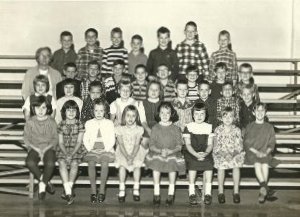
I have now been out of high school for almost two-thirds of my life. This summer I will be attending a couple of reunions – one at my high school and one with a group of folks with whom I attended elementary school.  I have not lived in either community in the 35 year interval since graduation and so it is with both anticipation and reservation that I approach the possibility of reconnecting with my former classmates.  All of this has gotten me thinking about some of the differences between these reunions and reunions of times past.

First of all, it seems to me that folks have begun to move past the vocational posturing that characterized the one reunion (20 years) that I have attended. Maybe we have lived long enough to begin to realize that life and work have many ups and downs and we are not totally defined by the work that we do. While meaningful work is important, it should be looked at as our opportunity to contribute to the world not as the sole means of self identity.

Secondly, most of us have by now experienced significant difficulties in life that have knocked some of the uncompromising rough edges off our personal interactions. Deaths, unemployment, broken relationships, and a myriad of other life situations have made us a little more accepting of other people’s life journey.

Finally, most of us have begun to accept the inevitable changes in our appearance. While a few folks have maintained face and figure, most people our age begin to make peace with less hair, more inches around the middle, and reduced stamina.  As we begin to accept the face that stares back at us in the mirror we also begin to offer a higher level of acceptance to our fellow middle-aged peers.

As I re-read the preceding paragraphs I suspect some people reading this will find it a little depressing. I don’t. I have found that getting more comfortable with my own mortality has freed me up to love people around me with less judgement and more wild abandon. I have less interest in passing judgment and more inclination to enjoy our time together.